
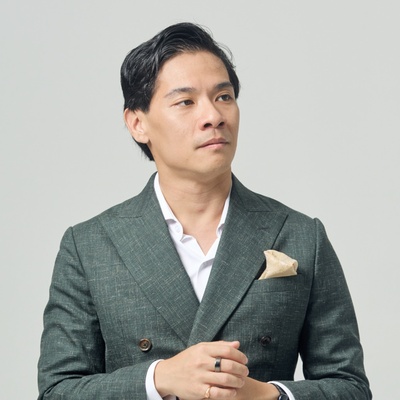
Dr Eugene Seow
Higher Music Education Lecturer and Practice-Led ResearcherBiography
Dr Eugene Seow is a higher music education lecturer and practice-led researcher working across musical judgement, aural fluency, ensemble pedagogy, assessment, curriculum design, supervision, and academic standards. He teaches across LASALLE College of the Arts, Nanyang Academy of Fine Arts, and Singapore Raffles Music College, and serves as Academic & Examination Board Member at Hitmaker Global Academy and Examiner with London College of Music Examinations / University of West London.
He supervises undergraduate and postgraduate projects in music, arts education, and practice-led inquiry, particularly where students need to connect artistic practice with a clear research question, appropriate methodology, and rigorous critical writing.
His supervision style is structured, supportive, and development-oriented. He places particular emphasis on conceptual clarity, realistic project design, appropriate evidence, and helping students articulate knowledge that may initially exist tacitly within their creative practice.
Teaching
Eugene teaches across undergraduate and postgraduate contexts in contemporary music, musicianship, pedagogy, academic writing, and research supervision. His work includes module teaching, curriculum development, assessment, dissertation supervision, master’s-level teaching, and ensemble coaching.
At LASALLE College of the Arts, he teaches contemporary music and supervises undergraduate dissertation projects. At the Nanyang Academy of Fine Arts, he teaches within the School of Arts Management, including music, academic skills, and interdisciplinary arts contexts. At Singapore Raffles Music College, he teaches undergraduate and postgraduate students, leads a master’s-level module, and supervises postgraduate research projects in pedagogy, creative practice, and music education.
Beyond formal classroom teaching, Eugene works across wider higher-education and conservatoire-adjacent contexts. These include guest teaching at the Yong Siew Toh Conservatory of Music and ensemble tutoring with the Centre for the Arts at the National University of Singapore through NUS Voices. He previously facilitated the UAS IN-depth module within the UAS Common Curriculum and also provides drum-set tutoring for NTU CAC Jazz and Blues. Across these settings, his teaching approach combines artistic depth with clear academic framing, helping students connect performance, reflection, research design, and communication.
Research Area and Expertise
Eugene’s research sits at the intersection of contemporary music practice, higher education, and practice-led inquiry. His main areas of expertise include:
- aural fluency, listening, and musicianship training
- ensemble cognition, groove, rhythm, and time-feel
- contemporary music pedagogy and curriculum design
- musical judgement, assessment, and feedback
- embodied learning and reflective practice
- practice-led and research-creation methodologies
- artistic process, identity, belonging, and student experience
More broadly, his work examines how musical understanding is generated, perceived, and evaluated across performance, rehearsal, teaching, and assessment.
Methodological Approaches
Eugene works primarily with qualitative, interpretive, and practice-led approaches. His methodological interests include:
- practice-led research and practice-based artistic inquiry
- reflective practitioner inquiry
- narrative inquiry
- case study
- qualitative interviewing
- pedagogical design inquiry
- artefact- and process-informed analysis
- documentation of rehearsal, performance, and creative process
He is especially interested in helping students choose methods that fit the realities of their artistic practice rather than forcing a creative project into an unsuitable research design.
Major Research Projects
His current and recent research includes:
- aural fluency, plural listening, and decolonising musicianship
- groove, rhythm, cyclicity, and ensemble interaction
- musical motion, coordination, and embodied performance
- patch literacy, timbre, and instrumental role-awareness
- judgement, validity, and assessment in arts higher education
- curriculum design for contemporary musicianship
- creative health, belonging, and identity in music education
- practice-led supervision and research design
Publications
Selected publications
- Disrupting Periodicity in Jazz Composition through Gagaku-Informed Listening Constraints. Virtuoso: Jurnal Pengkajian dan Penciptaan Musik, 2026
- More Than Just Piano: Patch Literacy as a Core Competency in Contemporary Ensemble Practice. College Music Symposium, 2026
- When Formal Criteria Fail: Judgment and Validity in Arts Assessment. Journal of Arts and Humanities, 2026
- Designing Genre-Inclusive Diploma Pathways in Contemporary Theory: A Practice-Led Curriculum Framework for an Independent Awarding Body. Asia-Pacific Journal for Arts Education, 2026
- The Intentional Pocket Project: A Jazz-Informed Workshop Series for Emerging Ensemble Musicians. Jazz Education in Research and Practice, 2026
- Creative Health Through Music Pedagogy: Case Studies in Identity, Listening, and Cultural Belonging in Higher Education. International Journal of Arts Education, 2025
- Decolonising the Rhythm Curriculum: Integrating Global Groove Practices in Undergraduate Aural Skills. Music Education Research, 2025
A fuller list of publications and scholarly work is available via my website and Google Scholar.
Availability for Academic Supervision
Eugene is available to supervise undergraduate and postgraduate projects in music, arts education, performance, and practice-led research.
He is particularly well suited to projects involving:
- contemporary music performance and ensemble practice
- groove, rhythm, timing, coordination, and rehearsal process
- aural skills, listening, and musicianship
- music pedagogy, curriculum, and assessment
- practice-led research and reflective creative practice
- performance preparation and embodied learning
- artistic identity, belonging, confidence, and student experience
- interdisciplinary projects connecting music with education, embodiment, technology, or creative process
He is especially interested in working with students who have a strong practical or artistic idea but need help developing a focused research question, defensible methodology, coherent evidence base, and academically rigorous written component.
Professional Expertise
Eugene’s professional expertise includes higher music education, curriculum and syllabus development, assessment design, dissertation supervision, practice-led research, contemporary ensemble coaching, and the translation of artistic knowledge into academically rigorous forms.
His continuing work as a performer, arranger, and multi-instrumentalist supports his supervision of projects involving rehearsal, performance, creative process, ensemble interaction, and professional music practice.
Key Projects and Activities
Selected recent projects and activities include:
- Guest lecturing at the Yong Siew Toh Conservatory of Music
- Completed facilitation of the UAS IN-depth module across Artist as Futurist, Artist as Experimenter, Artist as Placemaker, and Artist as Commentator pathways
- Ensemble tutoring with NUS Voices under the Centre for the Arts (CFA), National University of Singapore
- Drum-set tutoring with NTU CAC Jazz and Blues
- Coaching for the Ministry of Education Inter-School Jazz Big Band
- Continued conference, invited-talk, and practice-led research activity in higher music education
- Associate Editor for the Higher Education section of Frontiers in Education
Community and Public Engagement
Eugene’s public-facing work includes workshops, masterclasses, ensemble coaching, professional performance, and public writing on music, pedagogy, and creative practice. He is particularly interested in activities connecting artistic practice with education, intercultural exchange, mentoring, and student development.
Availability for Arts Projects Supervision
Eugene is also available to supervise music-led, sound-led, performance-led, and interdisciplinary arts projects.
Relevant areas include:
- contemporary music performance and ensemble creation
- rhythm, groove, and embodied musical practice
- sound, timbre, and instrumental role design
- workshop-based and educational arts projects
- practice-led and research-creation projects
- reflective documentation of artistic process
He is particularly well suited to projects where students need support turning an artistic idea into a coherent process, documented inquiry, critical reflection, and clearly communicated outcome.
Achievements and Awards
Selected achievements, qualifications, and distinctions
- Doctor of Music Education, Liberty University
- Master of Music in Jazz Studies: Performance Track, Queens College, City University of New York
- Bachelor of Music in Jazz Composition and Professional Music, summa cum laude, Berklee College of Music
- Fellow of the Higher Education Academy (FHEA)
- Fellow of the London College of Music (FLCM)
- Fellowship Diploma in Composition, with Honours, Victoria College of Music [FVCM(Hons)]
- Licentiate of Trinity College London in Drum Kit, Distinction (LTCL)
- Certificate in Professional Performance (Percussion), Distinction (CIPP)
- Selected recognitions include the Duke Ellington Award, Benny Golson Award, Steve Gadd Award, Best of Jazz Composition, and Blue Man Group New York Drum-Off semi-finalist